
You feel the pressure.
Your company’s AI-driven orders are surging. Your PMI (Purchasing Managers’ Index) has been expanding for nine straight months. Customers want their electronics, their PCBs, and their optical parts now.
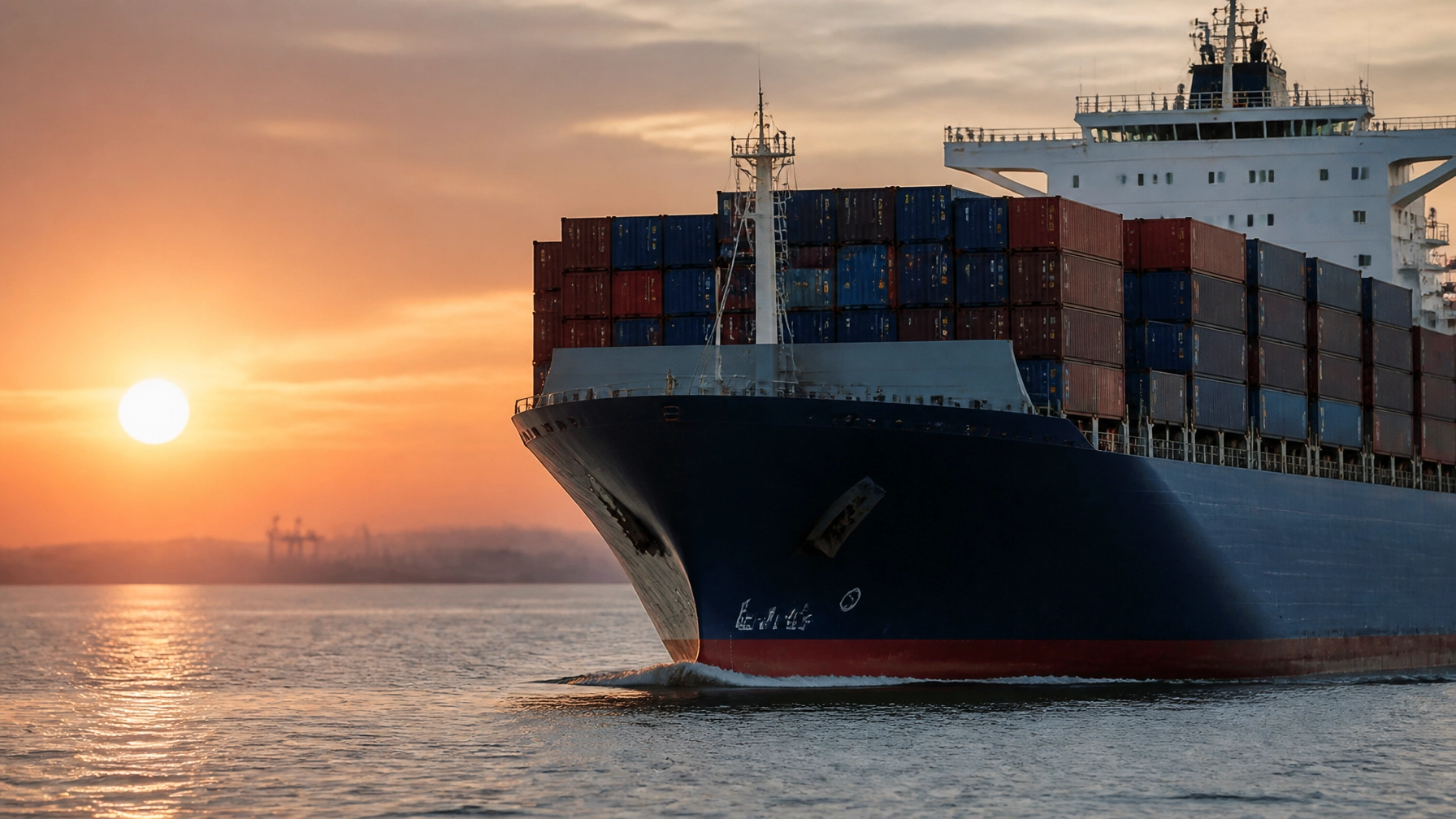
But the ships aren’t moving fast enough.
Between the Red Sea rerouting and tensions in the Middle East, your lead times are stretching. You know the technical details, but explaining these delays to your international partners in English feels like another “bottleneck.”
At IMCEnglish.com, I see this every day. You have the knowledge, but you struggle to find the right words when it’s your turn to speak at a global meeting.
Let’s fix that. Here is how to talk about supply chain pressure with confidence.
The Problem: When “Knowing” Isn’t Enough

You understand the situation perfectly in Mandarin. You know that rerouting ships around the Cape of Good Hope adds 12 to 15 days of sailing. You know that helium and LNG supplies are at risk.
But when you open your mouth in a Zoom call, you hesitate. You might say:
- “The ship is late.”
- “We have a problem.”
- “Wait more days.”
These phrases are okay, but they don’t show your professional expertise. They don’t help your partners understand the why or the how.
If you feel stuck, you are not alone. Many Taiwanese professionals struggle to 克服說英文的恐懼. The goal isn’t to be perfect; it’s to be clear.
The Cause: Why the Pressure is Building
The current disruption isn’t just one thing. It is a “perfect storm” of factors:
- Red Sea Rerouting: Most major container lines are avoiding the Suez Canal.
- Logistics Stress: Ships are taking the long way around Africa, pushing lead times out by 20+ days.
- AI Demand Surge: While shipping slows down, the world wants more advanced chips and components from Taiwan than ever before.
Your phrase to use: “Due to the permanent structural challenges in the Red Sea, our standard transit times have been fundamentally reshaped.”
The Effect: What Your Partners Need to Hear

When you speak to a client in Europe or the US, they need to know the impact on their business. They care about three things: time, cost, and inventory.
In your next 英文口說練習, try practicing these specific impact statements:
- On Lead Times: “We are seeing lead times extend by an average of three weeks for passive components.”
- On Costs: “Spiking freight rates and insurance premiums are directly inflating our landed costs.”
- On Cash Flow: “Longer transit times are putting significant pressure on our working capital.”
The goal: Don’t just say “it’s slow.” Use professional terms like lead time, landed cost, and working capital.
The Solution: Suggesting a Way Forward
A leader doesn’t just report problems; they suggest solutions. This is where you can truly shine in a meeting.
Instead of waiting for your boss to speak, take the initiative. Use these “Solution Scenarios”:
- The Contingency Plan: “We have developed a contingency plan that involves shifting 30% of our production to near-shoring locations.”
- The Mitigation Strategy: “To mitigate the risk of a total halt, we are diversifying our logistics routes through air freight for critical shipments.”
- The Expectation Management: “Given the current backlog, we recommend placing orders at least 60 days in advance to ensure on-time delivery.”
Next Step: Bridge the Gap at IMCEnglish.com

Reading this article gives you the vocabulary you need. But using it in a live conversation is a different skill.
If you already understand most of the English but find it difficult to use in real-time, you need practice in a safe space.
At IMCEnglish.com, I provide one-on-one 英文會話課程 specifically for professionals like you. We don’t use textbooks. We use your real-world problems.
In our sessions, we can:
- Role-play your next supply chain meeting.
- Practice explaining complex delays clearly and naturally.
- Build the confidence to stop giving “short answers” and start leading the conversation.
You don’t have to struggle alone. Every lesson provides practical speaking practice and clear feedback. You will leave feeling more capable every time you speak.
If you’re ready to turn your “passive” English into “active” English, I’m here to help.
Book a trial lesson today at IMCEnglish.com. If you don’t feel more confident after our talk, you don’t have to continue. No pressure—just support.
Key Vocabulary Glossary
| Term | Meaning | Example Sentence | 中文說明 |
|---|---|---|---|
| Lead time | The time between starting a process and its completion. | “Our current lead time for optical parts has increased to twelve weeks.” | 前置時間。在供應鏈討論中,這指從下單到收貨的時間,是溝通延誤時最核心的單字。 |
| Rerouting | Sending something by a different route. | “The rerouting around the Cape of Good Hope adds significant sailing time.” | 改道/繞道。特別指目前因紅海危機而避開蘇伊士運河的航運調整。 |
| Bottleneck | A point of congestion that slows down a whole process. | “Port congestion is creating a bottleneck for our European shipments.” | 瓶頸。形容流程中卡住的地方,在描述供應鏈中斷時非常實用。 |
| Surge | A sudden large increase. | “We are experiencing a surge in demand for AI-related server components.” | 激增。比 increase 更強烈,常用來形容 AI 需求或訂單突然爆發。 |
| Backlog | An accumulation of uncompleted work or orders. | “We are working hard to clear the backlog caused by the shipping delays.” | 積壓的訂單/工作。當貨物延遲時,會產生大量的積壓,這是向客戶解釋進度時常用的字。 |
| Procurement | The action of obtaining or buying goods and services. | “Our procurement team is looking for alternative suppliers for passive components.” | 採購。在企業環境中,比 buy 或 purchase 更正式的說法。 |
| Freight rates | The cost at which a certain cargo is delivered. | “Spiking freight rates are impacting our profit margins this quarter.” | 運費率。討論物流成本上升時的關鍵術語。 |
| Contingency plan | A plan designed to take account of a possible future event. | “We have a contingency plan in case the Middle East tensions escalate further.” | 應變計畫。展現專業度時,主動提出「備案」是非常重要的溝通技巧。 |
| Mitigation | The action of reducing the severity or seriousness of something. | “Air freight is our primary mitigation strategy for urgent orders.” | 緩解/減輕。正式表達如何「降低風險」或「減輕問題影響」的單字。 |
| Working capital | The capital of a business which is used in its day-to-day operations. | “Longer transit times mean more working capital is tied up in inventory.” | 營運資金。當貨物卡在海上,資金周轉會變慢,專業經理人常以此討論財務壓力。 |








發佈留言